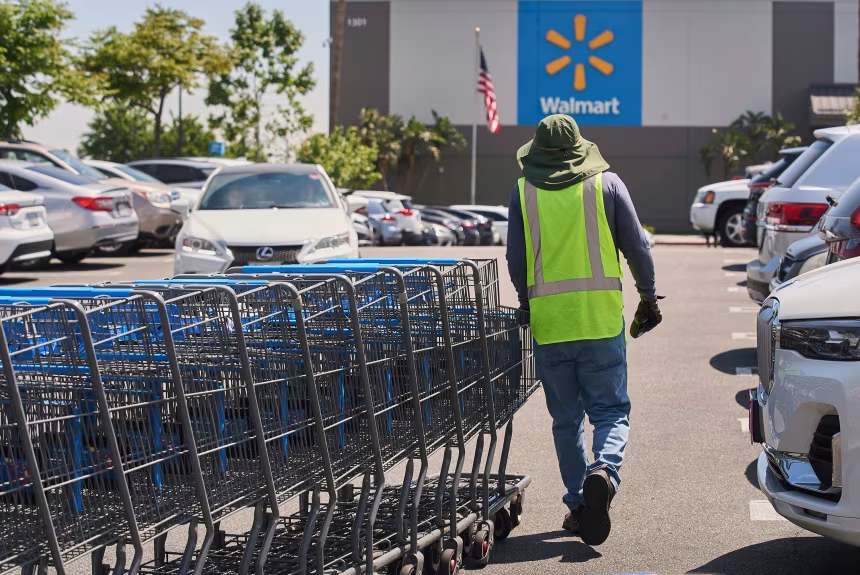
Rising gasoline prices are putting pressure on household budgets, contributing to Walmart’s weakest US store sales growth since the early months of the Covid-19 pandemic.
The nation’s largest retailer reported $6.4 billion in net income for the three months ending July 31. The strong results were supported by robust online sales and a $2.9 billion tariff refund, the largest such refund reported by a company so far.
Despite the strong earnings, Walmart’s stock fell more than 9% in early trading Thursday after the company reported that US store sales, excluding fuel, increased just 2.6% during the quarter. That compared with 4.6% growth during the same period a year earlier, marking the slowest pace since February–April 2020.
Walmart is widely regarded as an important indicator of US consumer spending. The slowdown in physical store sales was partly attributed to lower prices for GLP-1 weight-loss medications, as well as a growing number of customers shifting their purchases from brick-and-mortar stores to online platforms.
The results suggest that while consumers continue to spend, higher everyday costs and changing shopping habits are influencing where and how Americans make their purchases.
Higher gasoline prices are putting additional pressure on American households, leaving consumers with less money to spend on other goods and services.
Walmart Chief Financial Officer John David Rainey said Thursday that the consumer environment appears weaker than it was in February, before fuel prices began rising significantly.
Rainey pointed to higher fuel costs as one of the factors putting pressure on shoppers, noting that gasoline prices above $4 per gallon can have a psychological effect on consumers and influence their spending decisions.
Walmart said it plans to use the $2.9 billion tariff refund it received from the government to make what it described as “price investments” — essentially lowering prices on products in an effort to encourage customers to spend more.
Walmart is not the only major retailer to receive a substantial tariff refund for duties paid on imports during 2025 and early 2026.
Earlier this week, Target reported receiving approximately $994 million in tariff refunds. TJX, the parent company of TJ Maxx, Marshalls and HomeGoods, received about $331 million. Meanwhile, home improvement retailers Home Depot and Lowe’s reported refunds of approximately $730 million and $80 million, respectively.
The refunds are providing a significant financial boost to major retailers, while companies face the challenge of balancing higher operating costs with consumers who are becoming increasingly cautious about spending.